THE WHEELS
Coned, not flat
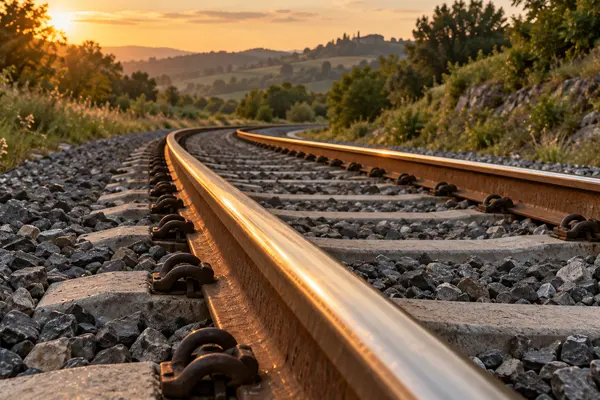
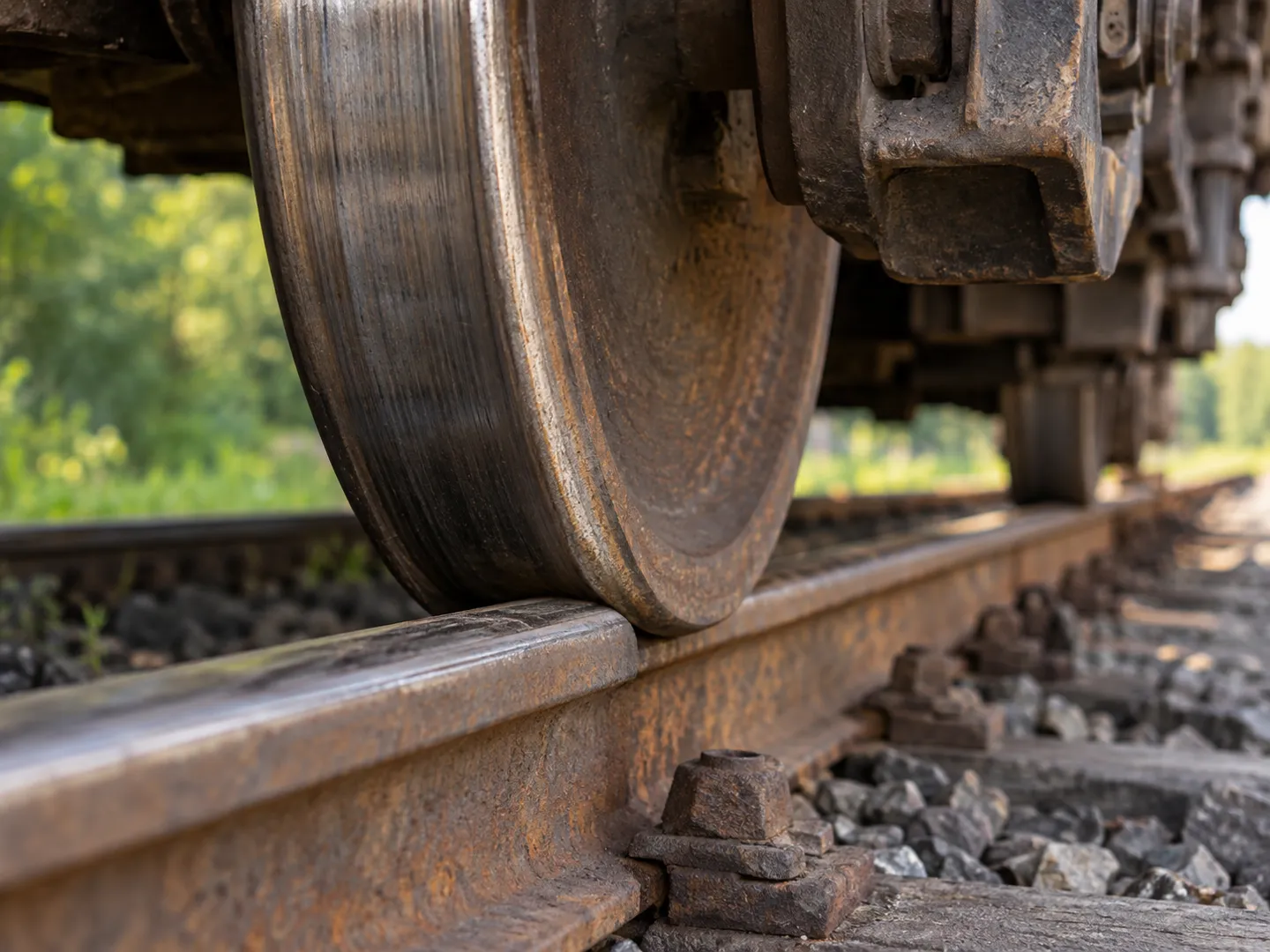
Railway wheels taper slightly, so on a curve the outer wheel rolls on a wider part of its tread.
How the taper steers doodletrains
HOW RAILWAYS WORK
Why a heavy train stays on two thin strips of steel.
4 FT 8½ IN since 1785
Wide vs narrow Two wheels, one solid axle
The secret is not the flange most people picture. It is the gentle cone shape of the wheels, which lets each axle take a curve without slipping. And the gap between the rails goes back to a wooden waggonway on Tyneside in 1785. Here is how it all fits together.
Plain English, with the sources linked.
THE SHORT ANSWER
Shape does most of the work.
The flange is only the backstop.
THE WHEELS
Railway wheels taper slightly, so on a curve the outer wheel rolls on a wider part of its tread.
How the taper steersTHE GAUGE
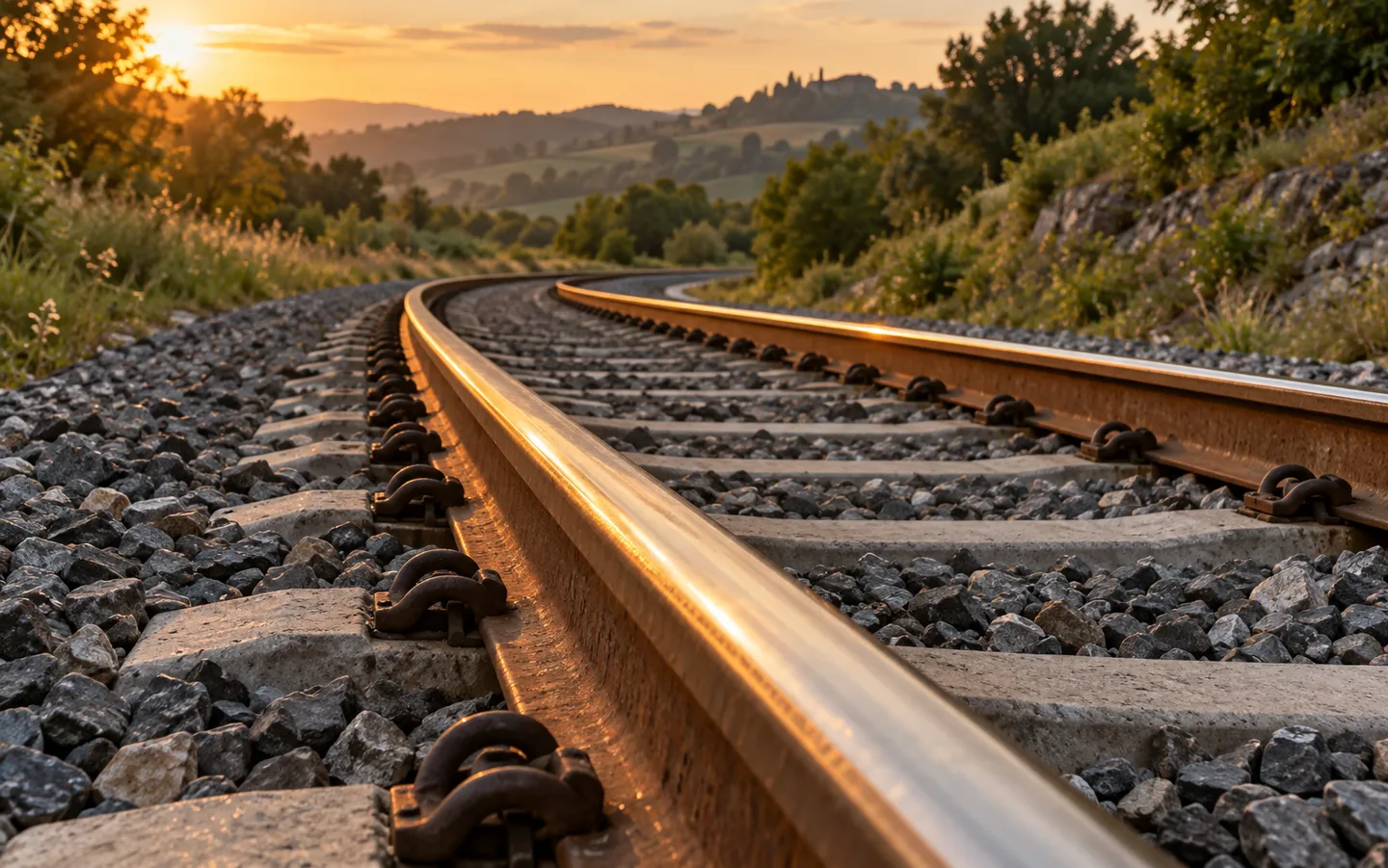
Standard gauge, 1,435 mm between the inside edges of the rails, was made law for new British passenger lines in 1846.
Compare the gaugesTHE SIGNALS
Since an 1889 Act, British lines have used block working and interlocking to keep trains apart.
Read the historyA QUICK GAUGE CHECK
Gauge is the distance between the inside edges of the two rails. Pick a gauge to see how it compares with Brunel’s 7 feet, the widest of the three.
Metric figures are conversions of the imperial measurements in the sources, rounded to the nearest millimetre.
WHAT TO LOOK FOR
A squeal on a sharp bend is often the flange rubbing the rail. That sliding contact is exactly what the coned tread is designed to avoid.
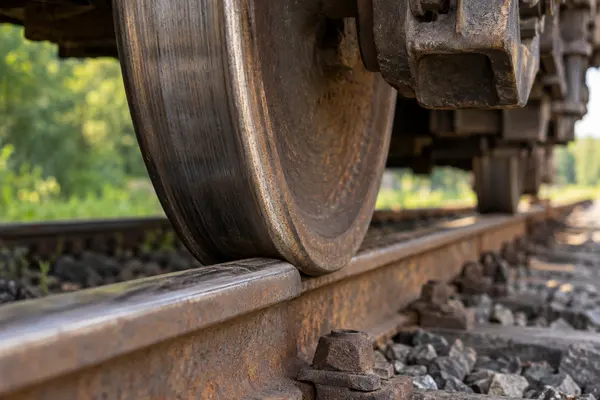
From a platform or in a museum, notice that the running surface is not a flat cylinder but a shallow cone, with the flange on the inside edge.
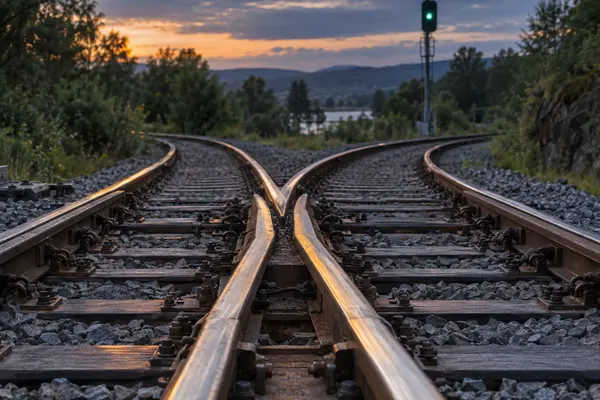
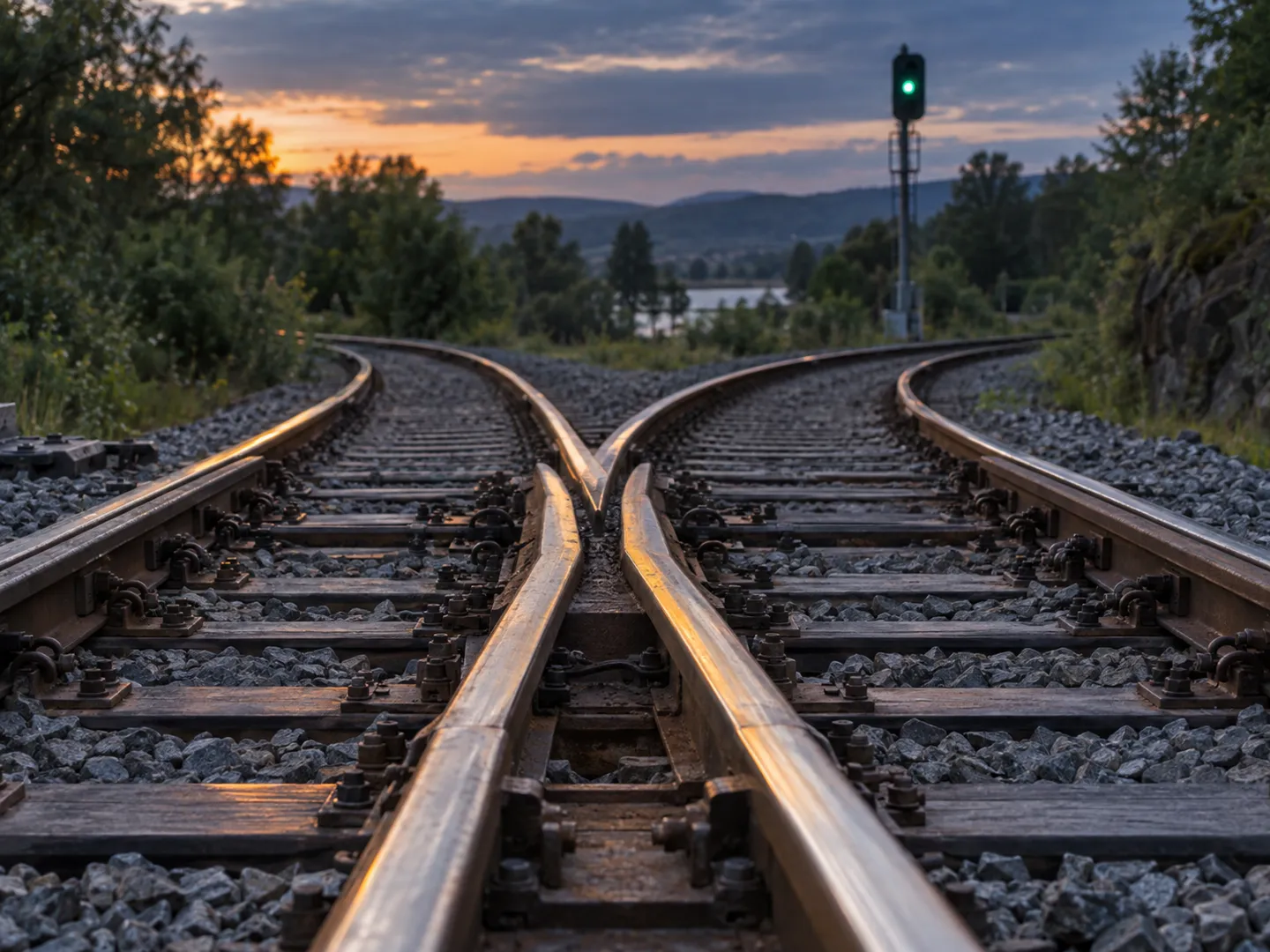
Where one line divides into two, the moving rails are called points. Interlocking of signals and points has been required on British lines since the 1889 Act.
The Stephenson Steam Railway in North Tyneside displays a section of the Willington Waggonway, and Rocket’s remains are in the Science Museum Group collection.
WHAT KEEPS IT ON THE RAILS
A wheelset has two jobs on a curve:
turn smoothly, and never wander too far.
Wide vs narrow
Two wheels, one solid axle
Both wheels turn at the same rate, yet on a curve the outer rail is longer. Because the treads are conical, the outer wheel rides on a larger diameter and the inner wheel on a smaller one, so each covers its own distance without slipping.
THE TAPERED TREAD
The backstop
A lip on the inside of each wheel
The flange resists the wheel moving too far sideways and keeps the train on the track. When it does touch the rail, the motion is almost pure sliding, which turns energy into heat, noise and wear.
THE FLANGE
That is why engineers like low friction where the flange meets the rail, but high friction on the running surface where the wheel grips.
RAIL HISTORY
A stretch of the Willington Waggonway, a wooden railway dated to 1785 and uncovered on Tyneside in 2013, is the earliest railway found that used 4 ft 8½ in.
Five locomotives entered the Rainhill trials in 1829. The Stephensons’ Rocket was the only one to complete them, averaging about 12 mph with a top speed of 30 mph.
The Gauge Act of 1846 required new passenger railways to use four feet eight and a half inches in Great Britain, and five feet three inches in Ireland.
The Great Western Railway was built to 7 feet. Conversion of the whole system to standard gauge was completed on 23 May 1892.
The Regulation of Railways Act 1889 brought absolute block working and the interlocking of signals and points. British Railways inherited about 10,000 signal boxes in 1948.
QUICK QUESTIONS
Short answers to the questions people ask most.
It is the metric equivalent of 4 feet 8½ inches. The earliest railway found using that gauge is the Willington Waggonway on Tyneside, dated to 1785. George Stephenson later used the same measurement, and the Gauge Act of 1846 required it for new passenger railways in Great Britain.
The wheels are not flat cylinders but slightly cone-shaped. On a curve the wheelset shifts outwards, so the outer wheel rolls on a wider part of its tread and the inner wheel on a narrower part. That lets the outer wheel cover more distance in each turn without slipping.
Each wheel has a flange, a raised lip on its inside edge. The coned treads do most of the steering; the flange is the backstop that resists the wheel moving too far sideways. When the flange rubs the rail, the contact is almost pure sliding, which wastes energy as heat and noise.
The Great Western was built to a broad gauge of 7 feet. From 1846 a standard gauge third rail was added to broad gauge lines, and the conversion of the whole system was completed on 23 May 1892.
No. The Gauge Act of 1846 set four feet eight and a half inches for Great Britain but five feet three inches for Ireland, about 1,600 mm.
Updated
A NAME ON THE RIGHT TRACK
doodletrains.com is part of the DoodleSale portfolio. It isn't in an auction right now, but you can ask about leasing it.